The orator
Words can organize people.
In a society without broadcasting and with limited literacy, the public meeting was the mass medium. Pal was among its most effective practitioners — and, unusually, we can still read what he said.
The platform
Why the meeting mattered
A newspaper reaches those who can read it and afford it. In the India of 1907, that was a narrow slice of the population. The public meeting reached everyone within earshot — and, through report and retelling, a good deal further.
The two media worked together, and Pal worked both. A speech drew a crowd; the newspapers reported it; the report was read aloud to those who could not read; and if the speech was substantial enough, a publisher printed it as a book. That last step is the one that concerns us here, because it is why Pal's oratory is recoverable at all.
There is a further point about the platform under colonial rule. A public meeting is a demonstration of numbers, and numbers were the one political resource Indians unambiguously possessed. To gather twenty thousand people on a beach and hold them for two hours was itself an argument — a visible refutation of the claim that nationalist agitation was the pastime of a few English-educated lawyers.
Pal understood the connection between the two forms exactly. He was a journalist who spoke and a speaker who printed, and he treated the platform and the page as a single instrument.
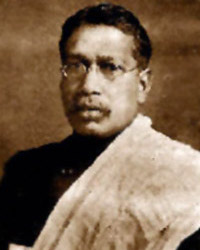
Madras, May 1907
At the close of the Calcutta session of the Congress, Pal was invited to make a short lecturing tour in the south. Between 2 and 9 May 1907 he delivered six lectures in Madras.
He opens the first by saying he had not expected the demonstration that met him — a procession the previous evening, and an audience out of all proportion to the large ones he had addressed in the city four or five years earlier. He declines to accept the reception as personal: it was, he tells them, in honour of the ideals of Swadeshi and Swaraj.
The chair at that first meeting was taken by G. Subramania Aiyer, editor of the Tamil newspaper Swadesamitran — a detail that captures how the movement actually travelled. A Bengali editor was introduced to a Madras audience by a Tamil editor. The nationalist press was a network before the nationalist movement was an organisation.
The lectures were taken down and published the same year by Ganesh & Co. of Madras. That volume is the single richest surviving source for Pal's spoken political argument.
The six lectures
Titles as printed in the 1907 volume.
I
The New Movement
An account of what the Swadeshi movement actually was, beneath its visible manifestations. Pal argues that the significance of the Partition of Bengal had been exaggerated outside Bengal — and that the real change was in national self-conception. It contains his line that no government, least of all an alien one, has the power to divide a people whom Gods united.
II
The Gospel of Swaraj
On the word itself — new, he says, to modern Indian political language, and given currency from the Congress platform by Dadabhai Naoroji at the Calcutta session. He interrogates the formula “self-government under British paramountcy”: if self-government included self-taxation and self-legislation, where would paramountcy come in? Recorded as lasting two hours.
III
Swaraj: Its Ways and Means
The practical continuation. This lecture contains the argument that of all kinds of despotism a benevolent despotism is the worst, because the benevolence makes people acquiesce in it — and the Vedantic reading of swaraj as knowledge of the self that requires conflict with the not-self.
IV
Boycott
The economic lecture. Passive resistance defined as asserting the national will strictly within the law; boycott defended as protection — protective tariffs imposed by a people on itself; an American consumers' league cited as precedent; and a frank account of where the boycott was working and where it was not. It closes by promising a separate lecture on national education.
V
The Contribution of Islam to Indian Nationality
Delivered at the invitation of a Young Men's Mahomedan Association, which Pal thanks at the opening. He declines to rehearse the “Hindu–Mahomedan problem” as a historical inevitability, observing that in his own youth no such problem existed in the terms then being used — religions differed and customs did not agree, but the political problem was recent. The most historically significant of the six.
VI
National Education
The promised lecture, delivered on a Thursday evening. His fiercest and most concrete argument: that a foreign government cannot direct national education, that colonial schooling was verbal rather than real, and that Indians had been taught to botanise the oak and the elm while ignorant of their own banyan and mango groves. Read the full treatment →
No audio recording of Bipin Chandra Pal is known to exist, and none is simulated on this site. What survives is the printed transcript of 1907.
How he actually spoke
The printed lectures let us describe his method rather than guess at it.
He argued rather than exhorted. The Madras lectures are dense with definitions, distinctions and qualifications. The boycott lecture is largely tariff theory. A modern reader expecting nationalist rhetoric finds instead something closer to a course of public lectures in political economy.
He conceded things. He tells a Madras audience that the significance of the Partition had been exaggerated — including by part of the Bengali press. He admits the boycott was uphill work and only partially effective on many goods. Concession was part of his technique; it made the rest of the case harder to dismiss.
He used ordinary detail. The smell of hay, the swallow he had never seen, the straw field he sniffed as a boy. The most effective passages in his lectures are not abstractions but small remembered absurdities that his audience recognised from their own schooling.
He was funny. The printed text records laughter. He jokes that the English, represented by John Bull, must naturally perceive sweetness in straw. He notes that no economist outside Manchester has ever called protection wrong. The humour is dry, and it is doing argumentative work.
He addressed the audience as capable of following him. Two hours on the meaning of a single word, with excursions through Vedanta and imperial constitutional theory, is not a speech aimed at the lowest common denominator. It is a compliment paid to a crowd, and the size of the crowds suggests it was received as one.
He kept within the law, deliberately. In the boycott lecture he states the strategy explicitly: keep ourselves within the bounds of law, keep ourselves in the right, and place those opposed to us in the wrong at every step. This is a tactician speaking, not an agitator.
It should be our endeavour always to keep ourselves in the right, and to place those who may be opposed to us at every step, in the wrong.
Bipin Chandra Pal, “Boycott”
Madras, May 1907
What we cannot recover
It is worth being honest about the limits of a printed transcript.
We have the words. We do not have the voice: no recording of Pal is known. We do not reliably have the pacing, the volume, the pauses, or how he handled a crowd of that size without amplification. The shorthand writers recorded interjections — hear, hear; cries of shame; laughter; cries of Vande Mataram — which tell us a great deal about the room, but they are notes, not a recording.
We also do not have most of his oratory. Six lectures from a single week in 1907 survive in book form. He spoke for fifty years, in two languages, across a subcontinent and in Britain. The overwhelming majority of that is simply gone.
This is the ordinary condition of the historical record, and it is why the 1907 volume matters so much: it is a rare surviving sample of something that was, at the time, everywhere.
Sources for this chapter
- Bipin Chandra Pal, Speeches of Bepin Chandra Pal, Delivered at Madras (Madras: Ganesh & Co., 1907). Lecture titles, order, the chairmanship of G. Subramania Aiyer, the recorded two-hour length of the second lecture, and all quotations are taken from the digitised printed volume.
- Catalogue record for Speeches of Bepin Chandra Pal Delivered at Madras, Indian Culture portal, Ministry of Culture, Government of India.
- Catalogue records, The Online Books Page, University of Pennsylvania Libraries — for Non-co-operation: Four Lectures (1920) and the Presidential Address, Bengal Provincial Conference, Barisal (1921).